Ask your value added reseller whether it handles laptop retrieval, and the answer is probably yes. Ask which system closes the offboarding ticket when that laptop arrives back at the warehouse, and the answer gets less certain.
Most large resellers now sell repair, retrieval and disposal. What they cannot decide for you is who owns each step and which system holds the asset record.
TL;DR:
- A value added reseller (VAR) resells hardware and software with services such as imaging, configuration and support.
- Large VARs like CDW, SHI and Insight also offer lifecycle services through retirement.
- The gap is rarely capability. It is unclear ownership, partial integrations and asset records split across portals.
- Define those before you sign or renew.
What Is a Value Added Reseller (VAR)?
A value added reseller is a company that buys technology from manufacturers or distributors and resells it with services attached. According to TechTarget, that added value can include installation, configuration, troubleshooting, consulting and training. For IT teams, it usually also means imaging, asset tagging, warranties and leasing.
How the value added reseller business model works
TechTarget notes that VARs mark up products only slightly and earn most revenue from added products and services. Hardware still carries a lot of weight: it made up 56% of Insight’s $8.25 billion in FY2025 net sales (Insight FY2025 earnings).
Revenue mix says nothing about how your account will be served, so evaluate the device price and the service commitments separately.
VAR vs. MSP vs. Distributor: What’s the Difference?
Buyers mix these up, and so do some vendor roundups. Ingram Micro, for example, often appears on VAR lists, but it is a distributor that supplies resellers.
| Provider type | Primary role | What to confirm before buying |
|---|---|---|
| Distributor | Supplies technology through the channel, mainly to resellers | Whether you can buy directly and which fulfillment or return services apply |
| VAR | Resells technology with added services | Which deployment and post-delivery services are included |
| Managed service provider (MSP) | Manages IT on an ongoing basis under a service agreement | Which systems, devices, locations and service levels are covered |
Treat these as buying categories, not fixed labels. The classic VAR relationship was project-based, but many resellers now run managed services too, and one provider may serve you under several models at once.
VARs Sell Lifecycle Services Now. Ownership Is Still Your Call.
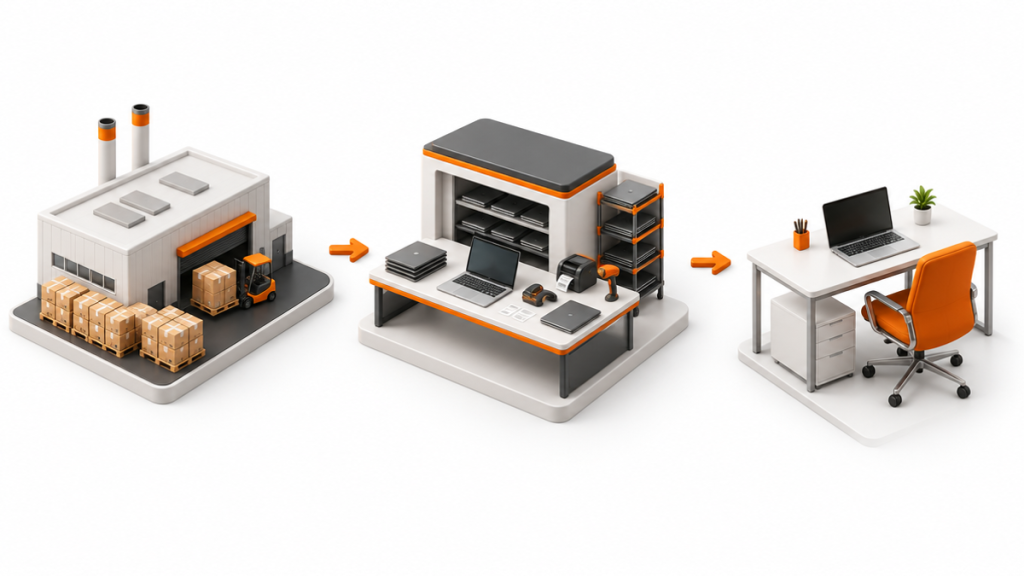
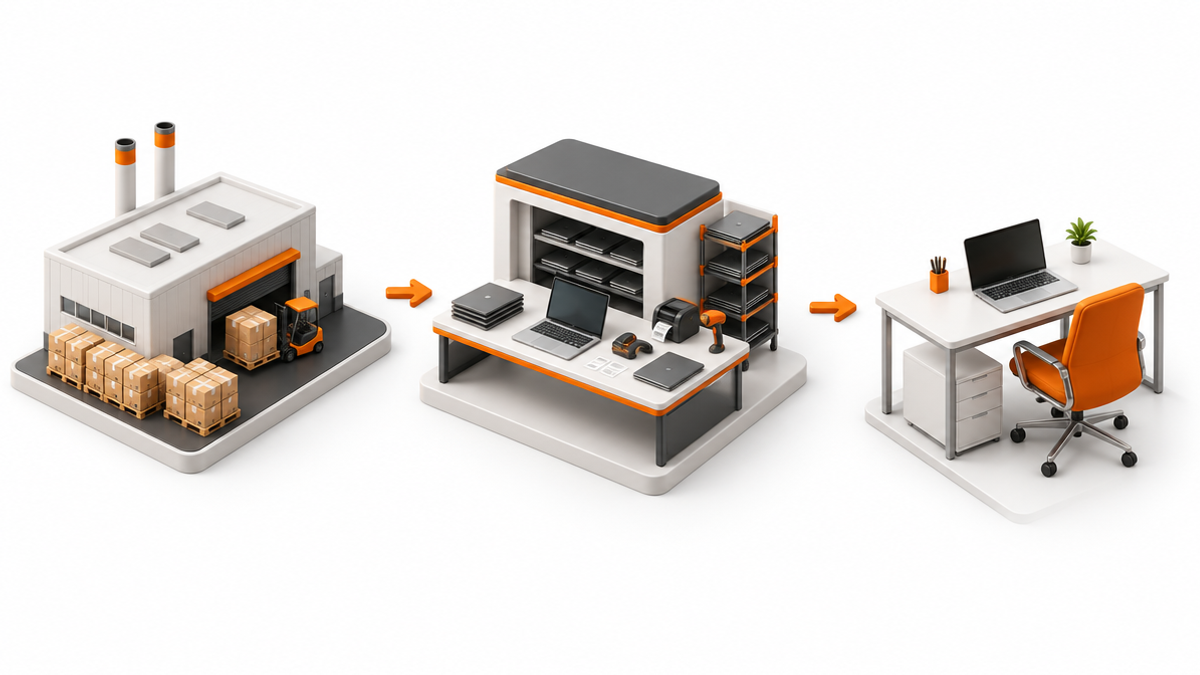
Most large resellers now advertise repair, refurbishment, remote retrieval and documented end-of-life handling, often with a portal for tracking returns. On paper, the full lifecycle looks covered.
A services page is not your contract. A responsibility matrix shows the difference:
| Lifecycle stage | Work involved | Question to settle |
|---|---|---|
| Purchase and deployment | Sourcing, configuration, tagging, shipping | Who records the assignment to the employee? |
| In-service support | Repairs, replacements, warranty claims, reassignment | Who opens the request and updates the asset record? |
| Employee departure | Return kits, shipping, reminders | Who contacts the employee and escalates an overdue return? |
| Recovery and retirement | Receipt, inspection, data sanitization, redeployment or disposal | Who supplies completion records and closes the asset? |
Any row without a named owner and a record is where devices go missing.
Why retrieval needs its own owner
A November 2022 Capterra survey of 287 HR employees found that 71% of respondents who had offboarded staff in the prior year saw at least one case of equipment not being returned. That is a share of respondents, not a share of departing employees.
The survey put the average estimated loss at $1,963 per incident, so 30 incidents would total $58,890. Your number will differ, but retrieval clearly needs an escalation owner.
Integration Is a Feature. Ask What It Actually Moves.
When fulfillment runs outside your service desk, technicians retype requests and reconcile asset records by hand. Some value added resellers have started closing that gap.
A few offer lifecycle integrations that send ticket updates and asset status changes into ITSM and ITAM systems. Others publish order management apps in ITSM marketplaces so requests can flow straight from the service desk to fulfillment.
“Integrates with ITSM” can still mean very different things. Before you count on it, confirm:
- Does it create orders, or only display status?
- Are serial numbers and employee assignments synced?
- Can it trigger repairs and retrievals, not just new orders?
- Which system is the authoritative asset record?
- What happens when a shipment or sync fails?
Mid-market teams should check one more thing. If you buy from two VARs and order Macs direct, each integration covers only its own orders.
Top Value Added Reseller Companies in 2026
Each provider below is a capable procurement partner. Published scale says little about response times or integration depth, so the right column lists what to examine.
| Provider | Verified context | What to examine |
|---|---|---|
| CDW | $22.4B in FY2025 net sales; markets device lifecycle services through retirement | Included services, regional coverage, retirement workflow |
| SHI International | Asset recovery with remote returns, chain of custody and certified destruction | Recovery agreement terms, portal requirements, reporting |
| Insight Enterprises | About $8.25B in FY2025 net sales; repair, retrieval, refurbishment and ITSM integration | Integration scope, recovery workflows, service levels |
| Connection | About $2.87B in FY2025 net sales | Lifecycle services in the actual proposal |
| Softchoice, a WWT company | Acquired by WWT, closed March 13, 2025 | Contracting entity, account coverage, service portfolio |
| Zones | ServiceNow order management app; global fulfillment | Supported platforms, regional execution, lifecycle scope |
Sources: CDW, Insight and Connection FY2025 earnings releases; WWT completed its roughly C$1.48 billion acquisition of Softchoice in March 2025 (BusinessWire); vendor service pages linked above. Pricing, scope and program terms change, so confirm details against current quotes and documentation.
When a VAR Is Enough (and When It Isn’t)
For many teams, a VAR is still the most efficient way to buy. The question is whether buying is the bottleneck.
| A VAR alone is usually enough when | You likely need more than a VAR when |
|---|---|
| Most staff work in one office | Teams are remote, hybrid or international |
| Turnover is low | Onboarding and offboarding volume is high |
| You buy from one reseller | You split spend across VARs or buy direct |
| Audit pressure is light | SOC 2 or HIPAA audits require chain of custody |
Two VARs, One MDM, One Service Desk. Where Does the Asset Record Live?
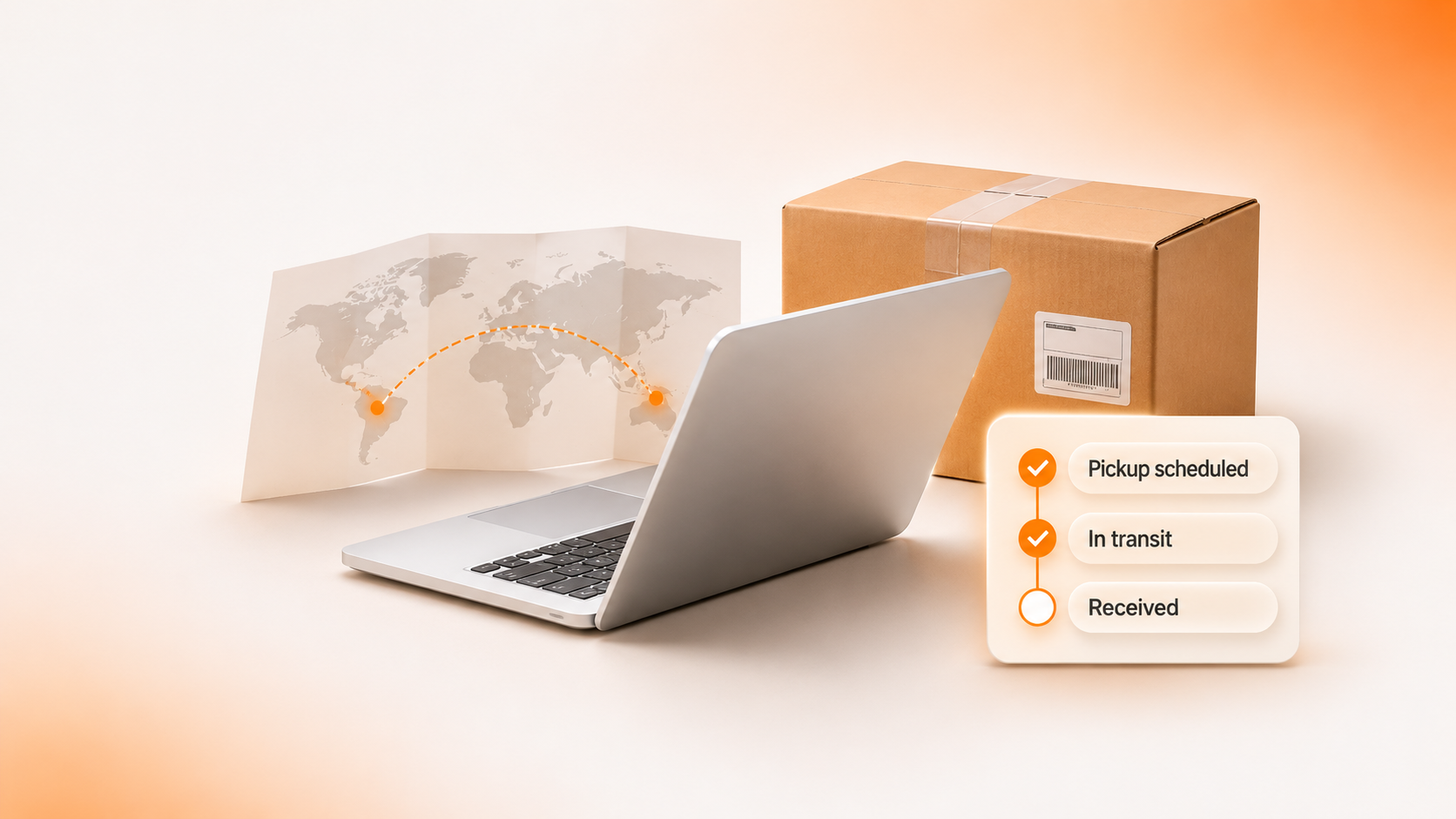
Unduit is an ITSM-native platform for the full device lifecycle, built to sit across the vendors you already use. Your VARs keep doing what they do well. Unduit connects their orders to your MDM (Jamf, Microsoft Intune or Kandji/Iru), your HRIS and your ITSM, including Jira, so every request and device change runs from one record.
Typical flow: HRIS flags a departure → ITSM ticket opens → return kit ships → employee gets reminders → device arrives and is inspected → wipe, redeploy or ITAD → ticket and asset record close together.
- Automated pickup scheduling with reminders and no manual follow-up
- Real-time tracking for laptops, monitors and peripherals in transit
- Smart inventory updates that log condition to your asset records
- Refurbish and redeploy recommendations to extend device value
- Secure chain of custody with every step logged for audits
- Global support for domestic and international shipments
- Employee updates by email, text or call
Unduit is built for mid-market IT teams. With one office, one VAR and low turnover, your reseller’s services may be enough.
FAQ
What is a value added reseller?
A value added reseller is a company that resells hardware and software with services such as imaging, configuration, installation and support. VARs help IT teams buy and deploy technology without managing every manufacturer relationship directly.
Do VARs handle device returns and retrieval?
Many large VARs do, usually as a separate service or agreement. SHI and Insight both advertise remote-employee retrieval. Confirm what is in your contract, who escalates overdue returns and which system records the completed return.
Are VARs cheaper than buying direct from Dell or Lenovo?
Sometimes. VARs offer volume pricing and bundled services, while direct purchases can win on promotions. Compare total cost, including imaging, shipping, support and retrieval.