Your MDM shows 1,140 enrolled laptops. Finance has paid for 1,260. Those 120 devices aren’t a rounding error. They’re in return boxes, at a repair vendor, or in the closets of people who left last quarter.
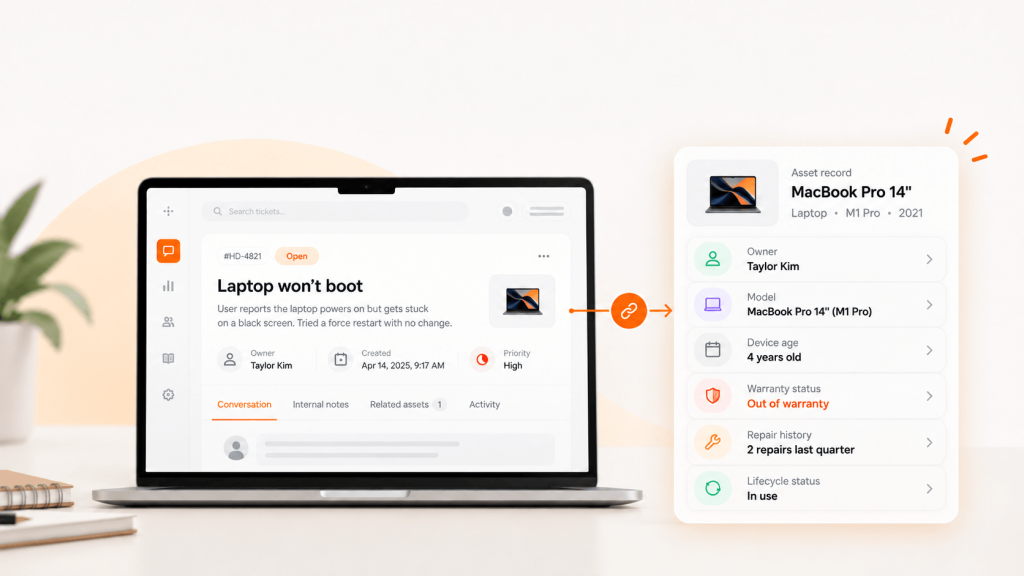
Most IT teams already run an ITAM tool. The problem is that IT asset visibility breaks in places that tool never looks: the moments a device changes hands.
TL;DR
- IT asset visibility means knowing where every device is, who has custody of it and what state it’s in, including when it’s offline.
- Asset inventory is Control 1 of the CIS Critical Security Controls, because “enterprises cannot defend what they do not know they have.”
- Most gaps open at custody handoffs: courier, depot, repair vendor and recycler.
- The fix isn’t more discovery. It’s logging every handoff automatically.
Why your ITAM tool still has blind spots
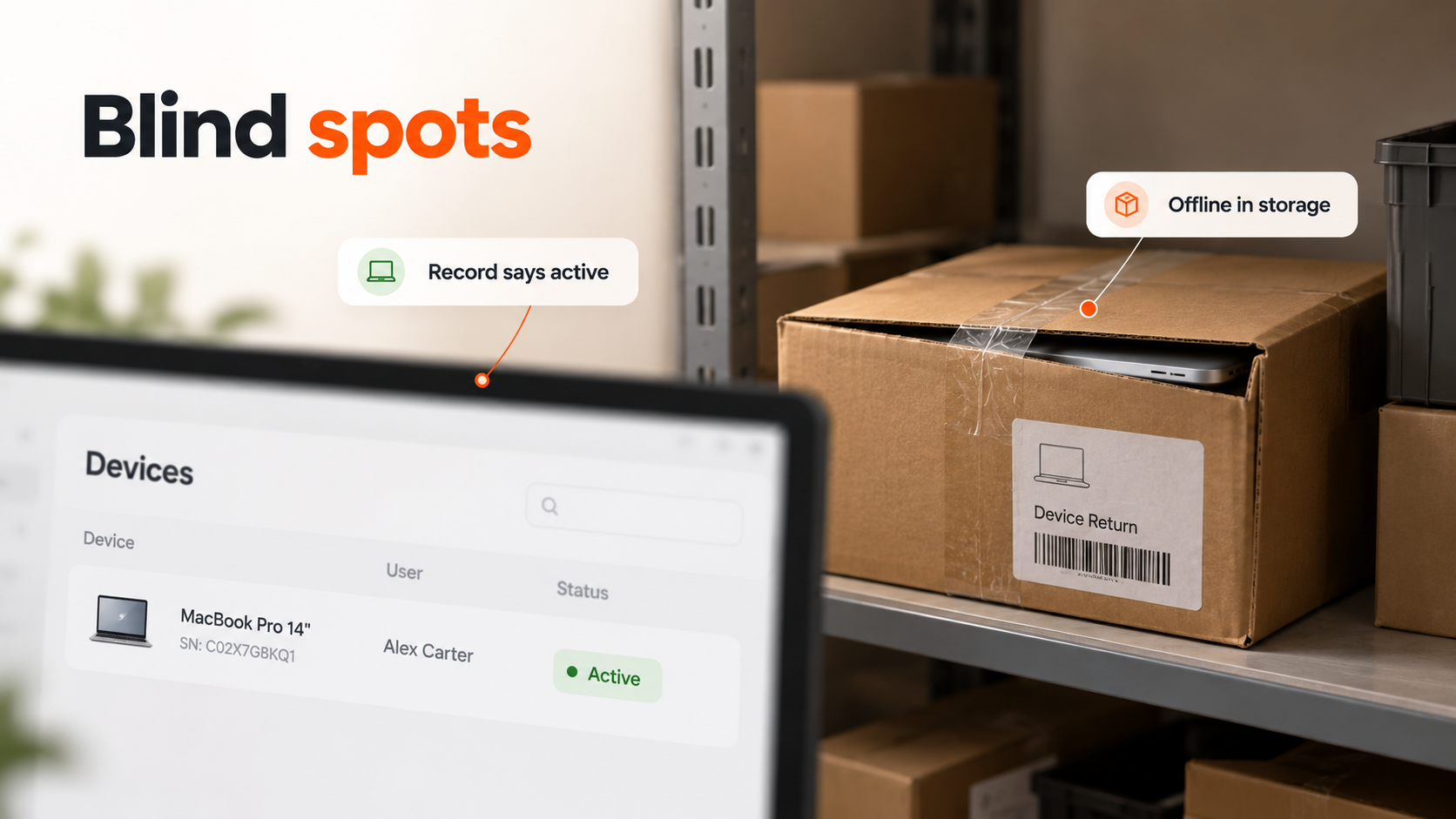
Discovery, MDM and ITAM platforms are built around one assumption: the device will check in. That holds for laptops in daily use. It fails for every device that’s boxed, shipped, stored or waiting for a pickup.
When a device goes quiet, its record freezes. It keeps showing the last user, the last location and an “active” status, sometimes for months.
Every handoff is where the record goes stale
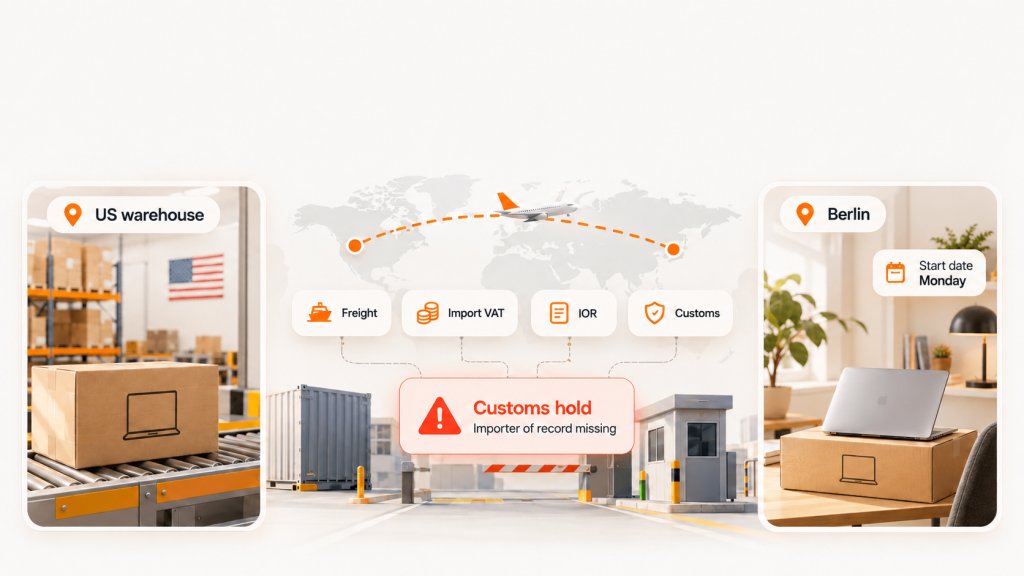
A single laptop changes custody six or more times over its life. Each handoff is a point where someone must update the record by hand.
| Handoff | Who holds the device | What usually goes unrecorded |
|---|---|---|
| Supplier to courier | Carrier | Tracking number and expected delivery date |
| Courier to employee | New hire | Confirmed receipt and serial match |
| Employee to courier | Carrier, after offboarding | Pickup date and return status |
| Courier to depot | Warehouse or office closet | Condition and redeploy readiness |
| Depot to repair vendor | Third party | RMA number and expected return |
| Depot to recycler | ITAD provider | Wipe certificate and final disposition |
None of these steps trigger an MDM check-in. That’s why a “fully deployed” ITAM tool can still be wrong.
What blind spots cost a mid-market IT team
Take a company with 1,200 employees across nine countries and 30 departures a month. If recovery takes six weeks, about 45 laptops are untracked at any moment. At $1,400 each, that’s roughly $63,000 in hardware nobody can locate.
The bigger exposure is the data on those devices. The average US data breach cost $10.22 million in 2025, according to IBM’s Cost of a Data Breach Report. A missing laptop that was never wiped is an open question at audit time.
Other costs add up quietly:
- Replacement laptops bought while recoverable ones sit in storage
- Leases and warranties renewed for devices nobody can find
- Technician hours spent chasing former employees by email
IT asset visibility for remote, hybrid and global teams
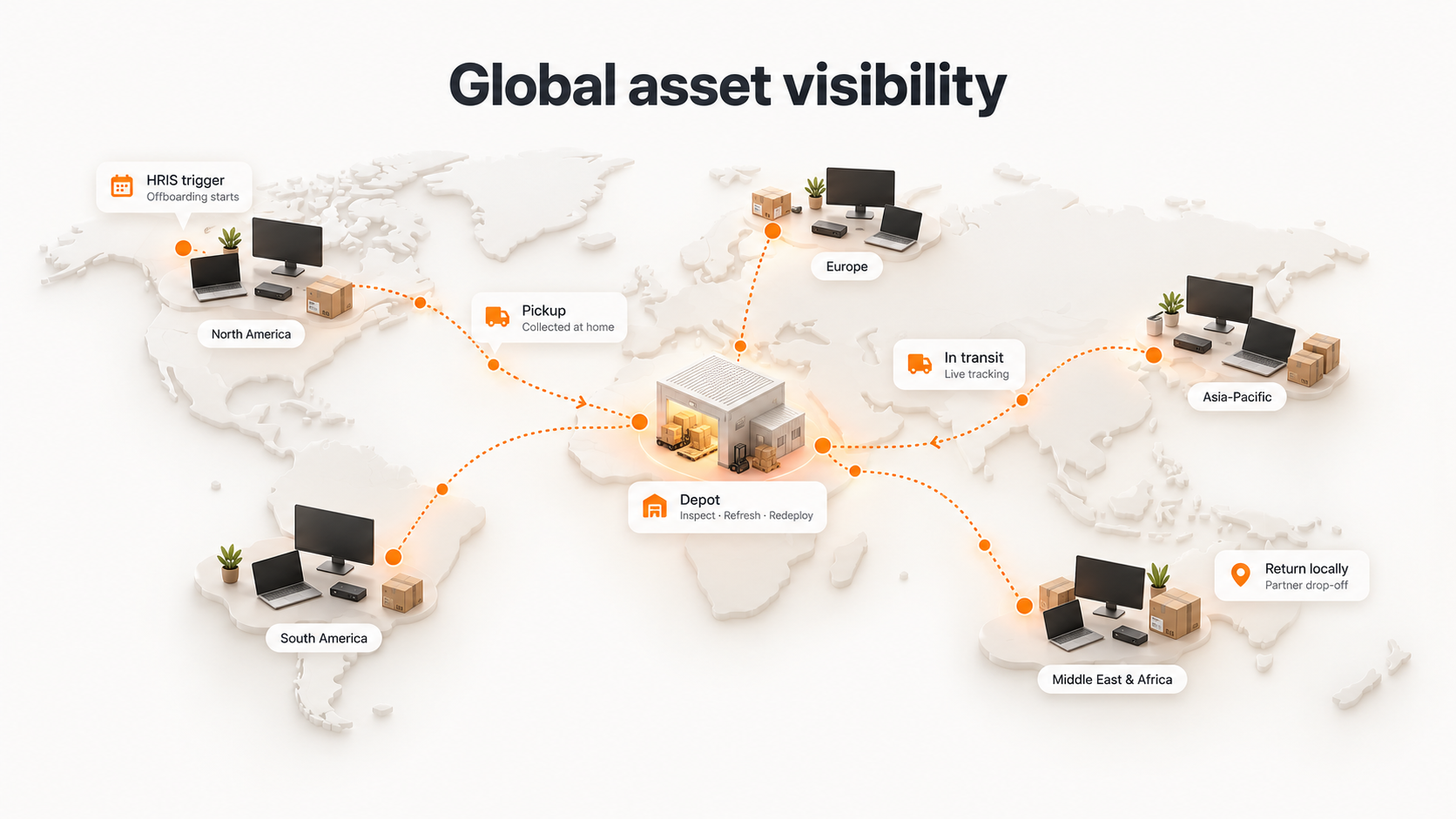
Distributed teams have more handoffs and fewer physical checkpoints. Three practices close most of the gap:
- Trigger from HRIS. A termination should open a recovery workflow automatically, not wait for a ticket.
- Log custody, not just location. Each handoff becomes a timestamped event with a named holder.
- Decide the return path by country. Redeploying or recycling in-country is often faster than shipping back to US headquarters.
For hybrid teams, the usual gap is peripherals. Docks and monitors bought for home setups rarely get tagged.
Three ways to close the gap
| Approach | What it covers | Where it falls short | Fits when |
|---|---|---|---|
| MDM plus spreadsheets | Enrolled, online devices | Anything offline or unenrolled; manual updates | Small fleets in one location |
| ITAM or ITSM platform with an asset module | One record, ticket context, discovery | Still depends on people logging shipping, returns and disposal | Mostly office-based teams |
| Lifecycle platform connected to ITSM and MDM | Custody events logged by the logistics workflow itself | Another vendor to integrate and evaluate | Remote, hybrid or multi-country fleets |
Questions to ask before choosing an IT asset visibility platform
- Which events update the asset record automatically, and which need a person?
- What does the record show while a device is in transit or at a depot?
- Does an HRIS termination open a recovery workflow on its own?
- Are wipe certificates attached to the asset record?
- Which countries are covered for pickups and returns, in writing?
- Can IT, finance and HR each see the view they need?
How to know it’s working
| KPI | Formula | Suggested starting target |
|---|---|---|
| Time to locate | Median time to confirm a device’s location and holder | Under 1 business day |
| Stale assignments | Devices still assigned to employees who left 30+ days ago | Zero |
| Record accuracy | Verified-correct records ÷ records sampled | 95%+ |
| Untracked in-transit devices | Shipped devices with no tracking event in 7 days | Zero |
Targets are suggested starting points, not published benchmarks. Set your own baseline first.
Every Handoff Is a Chance to Lose a Laptop
Unduit is built for the stretch of the lifecycle where devices go offline. It connects procurement, shipping, recovery and retirement to your service desk and asset records across 100+ countries, so custody changes are logged as they happen. Its AI-powered IT agent handles the follow-up while you keep full control:
- Automated pickup scheduling: sends reminders and arranges pickups without manual follow-up.
- Real-time tracking dashboard: monitors laptops, monitors and peripherals in transit.
- Smart inventory updates: logs returned devices and their condition, and syncs with your asset management system.
- Refurbish and redeploy recommendations: suggests repair, upgrade or redeployment options to recover asset value.
- Secure chain of custody: records every step for audits, with R2-certified recycling at end of life.
- Global support: handles domestic and international shipments.
- Employee-friendly communication: keeps employees updated by email, text or phone.
FAQs
Is MDM enough for IT asset visibility?
No. MDM sees enrolled devices while they’re online. It misses peripherals, unenrolled hardware and anything boxed, in transit or in storage.
How do you keep track of laptops during offboarding?
Open recovery from the HRIS termination, revoke access the same day and log each handoff. Close the record only after confirmed receipt or a wipe certificate.
How long does it take to close visibility gaps?
Most mid-market teams can build a reliable baseline in six to eight weeks, starting with devices assigned to departed employees.
Do you need a CMDB for IT asset visibility?
Not for tracking custody. A CMDB maps how systems depend on each other; visibility gaps sit in physical handoffs.
Can you track remote employees’ devices without privacy issues?
Yes, if you track company-owned assets rather than personal activity. Disclose what you collect and confirm state privacy laws, such as the CCPA, with counsel.